
Climate Action Programme

Climate Action & Environmental Sustainability

Water Conservation and Harvesting

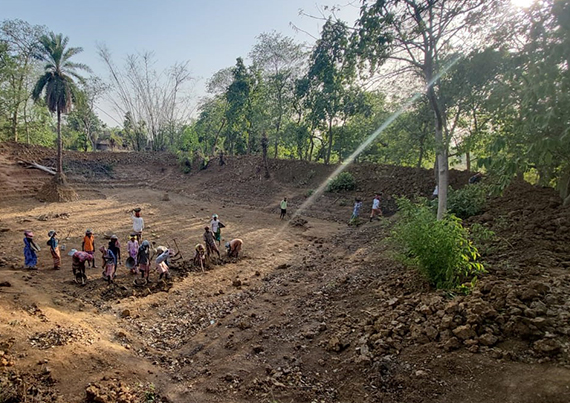
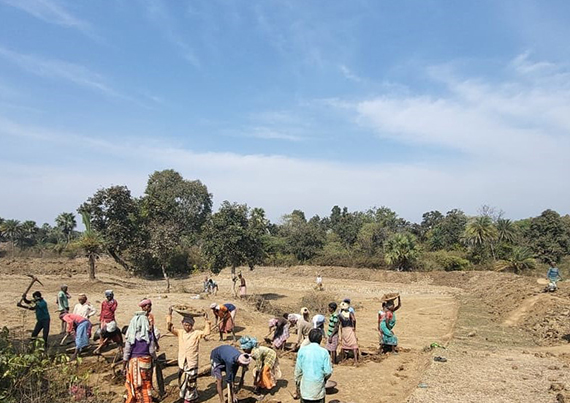
Gram Sathi implemented an Integrated Micro-Watershed Management Project in Chhatna Block of Bankura District, West Bengal, with financial support from the Linde Foundation. The project was implemented across multiple villages with the objective of improving water availability, conserving soil, restoring degraded land, strengthening sustainable agriculture, and building the resilience of farming communities against the impacts of climate change.

The initiative focused on strengthening the relationship between environmental conservation and rural livelihoods. Through participatory planning and close engagement with villagers, Gram Panchayat representatives, and government stakeholders, Gram Sathi identified local environmental challenges and developed interventions based on the needs of the watershed communities.
Water Conservation and Harvesting — Bihar & Jharkhand

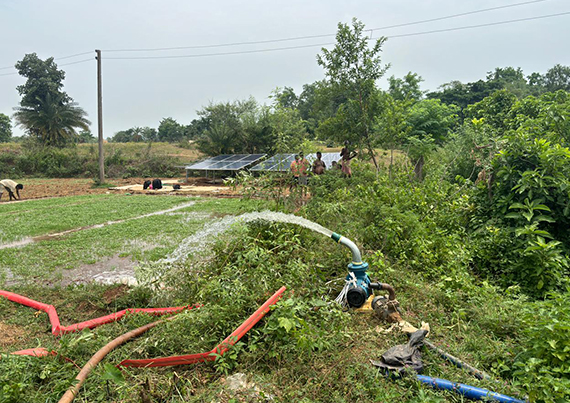
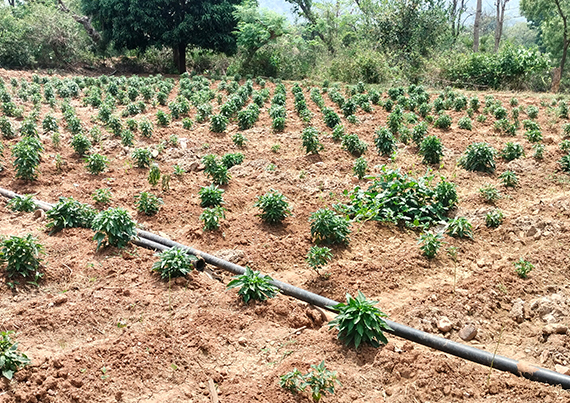
For long-term solutions to the shrinking groundwater resources and ever-expanding soil salinity, Gram Sathi is working for recharging groundwater surface and harvesting rainwater through watershed structures over a catchment area of 750 sq. km. in Katoria block in Banka district in Bihar. In 2015-16, with the support of people's cooperation, a check dam was constructed at Targahat Joria River that helped in bringing water to the villages for irrigation purposes. The farmers who had so far been doing monsoon-based farming are now able to do farming all round the year. This enables multi-cropping in the villages, providing sustainable livelihoods to the people residing in the watershed area. The effort of Gram Sathi was praised by Mr. Adesh Titarmare, DM of Banka district.

Key Achievements

  • Check dam constructed at Targahat Joria River (2015-16).
  • 750 sq. km. catchment area covered.
  • Year-round farming enabled (previously monsoon-based only).
  • Multi-cropping promoted in watershed villages.
  • Appreciation from Mr. Adesh Titarmare, DM of Banka district.

Smokeless Chulha Programme — Katiyari Village, Banka District

It is estimated that 86% of rural and 24% of urban households still rely on biomass fuels. The victims of these diseases are predominantly women who are involved in cooking. Smoke from traditional chulhas during cooking is also one of the major reasons for ill health of rural women in Katiyari village in Banka district in Bihar.

One of the solutions may be the adoption of smokeless chulhas for cooking. The smokeless chulha is simple in design and mechanism and operates similarly to the traditional chulhas used by many families except that it has a chimney. Its fuel efficiency is also high, thus reducing the quantity of fuels.

On 20 February 2016, a training program was organized through which women were trained on the preparation and use of smokeless chulhas. As a result, in all 550 houses of Katiyari village, smokeless chulhas are now being used.

Water Harvesting and Management — Pakur District, Jharkhand

In Jharkhand, the programme of water harvesting and management had been implemented at Pakur district. Gram Sathi team shared the project implementation plan, innovativeness to the implementation, and also acknowledged the dissemination of governing the plan from local governance. The workshop also unveiled the planning regarding rain harvest management and groundwater management in percolating and lifting the water in a sustainable manner.

Approaches and Outcomes

  • Impact on water harvesting and management practices.
  • Established the execution activities implied to promote resource management.
  • Sustainable management of rain harvest water management and groundwater management.
Our Key Areas of Work

Water Conservation & Climate Resilience

Our initiatives focus on soil and water conservation, sustainable agriculture, and community participation.

1. Soil and Water Conservation

  • Activities such as contour bunding, trench-cum-bund construction, earthen check dams, and water harvesting structures were undertaken to reduce soil erosion, slow down surface runoff, improve water infiltration, and support groundwater recharge.
  • These interventions helped conserve rainwater and improve soil moisture, creating better conditions for agriculture in drought-prone areas.

2. Water Harvesting Structures & Ponds

  • Water harvesting structures and small ponds were developed to capture and store rainwater that would otherwise be lost through runoff.
  • These structures have supported farmers by improving the availability of water for irrigation during critical stages of crop cultivation.
  • They have also contributed to groundwater recharge and provided an important source of water for livestock during dry periods.

3. Sustainable & Climate-Resilient Agriculture

  • Promoting dryland farming, System of Rice Intensification (SRI), vegetable cultivation, millet cultivation, and the use of bio-fertilizers.
  • Reducing dependence on excessive chemical inputs, improving soil health, increasing water-use efficiency, and strengthening agricultural productivity.
  • Encouraging crop diversification — millets, pulses, vegetables, and other suitable crops — to reduce climate-related risks and improve food security, nutrition, and income.

4. Horticulture, Plantation & Agro-Forestry

  • Promoting horticulture and small orchard development as part of the programme.
  • Plantation activities contribute to soil conservation, improved water infiltration, biodiversity enhancement, and carbon sequestration, while simultaneously creating long-term livelihood opportunities for rural households.
  • Supporting the productive use of previously underutilized and degraded land through sustainable land-use practices.

5. Vermicomposting & Organic Farming

  • Promoting vermicomposting and environmentally sustainable farming practices to improve soil fertility and encourage the use of organic and locally available resources.
  • By reducing excessive dependence on chemical fertilizers and pesticides, such practices contribute towards healthier soil ecosystems and more sustainable agricultural production.

6. Livelihood Development & Environmental Conservation

  • An important component of the programme was the integration of livelihood development with environmental conservation.
  • Activities such as fishery development and sustainable agriculture were promoted alongside water conservation interventions, demonstrating how natural resource management can create both environmental and economic benefits for rural communities.

Project Reach

Under the water conservation and harvesting programme, Gram Sathi has achieved the following:

750 Sq. Km. Catchment Area
550 Smokeless Chulhas (Katiyari)
86% Rural Households Rely on Biomass
2015-16 Check Dam Constructed

Community Participation & Capacity Building

Community participation has remained at the centre of Gram Sathi's climate action approach. Regular meetings and consultations were organized with villagers, Gram Sabha members, Panchayati Raj Institutions, farmers, and other stakeholders to ensure that interventions were locally relevant and community-owned. Capacity-building programmes helped farmers understand the importance of soil conservation, water-efficient practices, sustainable agriculture, and climate adaptation.

Our Approach to Climate Action

Through these interventions, Gram Sathi aims to contribute towards healthier ecosystems, improved water security, enhanced agricultural productivity, and stronger climate resilience among vulnerable rural communities. Our approach recognizes that effective climate action must go beyond environmental protection — it must also strengthen the capacity of communities to adapt, sustain their livelihoods, and manage natural resources responsibly.

"Protecting Natural Resources, Strengthening Climate Resilience, and Building Sustainable Communities."